Ortlinghaus Installation
Ortlinghaus wanted to optimize their washing process and reduce daily maintenance in production. In collaboration with ANMASI A/S, a fully automated washing system was implemented, which has improved efficiency, reduced downtime, and ensured a more consistent wash quality.
About Ortlinghaus
Ortlinghaus is a clutch manufacturer with production facilities in Remscheid, Germany. The company specializes in the manufacture of technical clutch and brake solutions for the industrial sector. High precision, operational reliability, and consistent product quality are essential here.

Ortlinghaus's challenge
Ortlinghaus Previously, we had a washing process that required daily and weekly maintenance. This included, among other things, filter replacement and routine inspections. This resulted in both wasted time and a more manual workflow, which was time-consuming.
At the same time, the company wanted a more stable and consistent cleaning quality. The parts had to be ready for the next process step every time, with no variation in cleanliness or treatment.
Consequently, there was a need for a washing solution that could reduce operator workload and minimize maintenance. At the same time, the solution was expected to improve process stability on the demanding production line. The company therefore sought advice from ANMASI A/S regarding opportunities for significantly optimizing the process.
The Solution
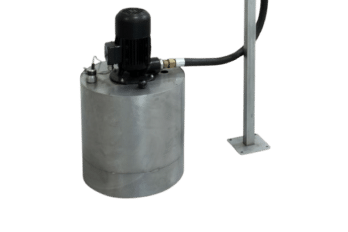
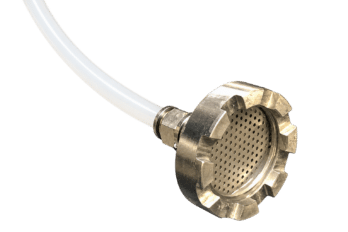
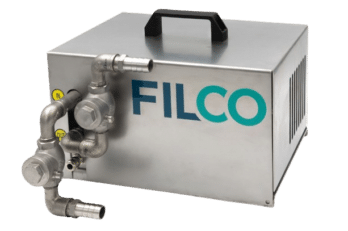
ANMASI A/S implemented an advanced, fully automatic washing system with a capacity of 700 kg and a loading platform measuring 1000 x 1000 mm. The system is equipped with a fully automatic filtration system featuring a magnetic filter and oil separator from FILCO. This eliminates the need for daily and weekly filter changes as well as ongoing manual inspections.
The new solution has significantly reduced downtime and ensures consistent cleaning quality from day to day. After cleaning, the parts can be transferred directly to an oil-dipping process for rust protection. They are then sent on to the warehouse.
Automation has also reduced the daily operator time required for manual loading by 1–2 hours. This has improved overall production efficiency.