
Frequently Asked Questions
Here you'll find answers to some of the most common questions about our washing systems, filtration systems, and Wastewater treatment plant for treating industrial wastewater.
We have compiled information on topics such as operation, service, and maintenance, as well as the selection and use of chemicals, filter paper, and filter bags. Our goal is to make it easy for you to find answers to your questions and get the most out of your system.
Kan du ikke finde det, du leder efter, er du altid velkommen til at kontakte os.
FAQ - General
Can your solutions be tailored to our specific needs?
Yes, our solutions are always tailored to each customer’s specific needs and requirements. We begin our collaboration by understanding your situation and conducting tests based on your specific issues and cleaning needs.
The same applies when selecting filtration solutions and treating wastewater. If you are unsure whether your wastewater can be treated, we can receive a sample from you and test it at our facility in Grindsted.
Although we always strive to find the right solution, we are also honest if a task cannot be completed or if we cannot meet your cleanliness requirements or specifications. Honesty is one of our core values and an important part of the way we do business.
Which industries does ANMASI Group provide solutions for?
ANMASI Group We provide solutions for a wide range of industries—as long as there are parts that need to be washed, process fluids that need to be filtered, or wastewater that needs to be treated, we’re here to help.
Among other things, we work with customers in the metal, plastics, pharmaceutical, workshop, aviation, defense, and maintenance industries. In recent years, we have also gained extensive experience helping customers remove challenging residues such as epoxy, paint, and adhesive from their workpieces.
Learn more about the industries we've provided solutions for Here.
Does ANMASI Group provide solutions to customers around the world?
Yes, ANMASI Group provides solutions to customers all over the world. We have a network of dealers in Europe who help us stay close to our customers. You can find our list of dealers here.
In addition, we have an established warehouse in New Jersey, USA, where we stock Consumables —including chemicals, filter bags, and filter paper —for our customers.
Where does the name ANMASI come from?
ANMASI is named after Jan Hedeby Sørensen's three children, Anders, Mathias, and Sine.The namewas created by combining the first two letters of each of their names.
An interesting fact is that all three children now work for the company and are partners at ANMASI Group.
In which countries does ANMASI have local partners?
ANMASI Group has its own sales departments in Sweden and Germany, as well as a network of local dealers in several European countries.
In addition to our own branch in Germany, we work with three other German dealers. We also have local partners in the Czech Republic, Romania, Bulgaria, Belgium, Hungary, the Netherlands, Estonia, and Norway.
To better serve our international customers, we also have a warehouse in New Jersey, USA, where we stock Consumables , including chemicals, filter paper, and filter bags.
You can find a complete list of our dealers here.
Does ANMASI have experience with the ISO 16232 standard for cleanliness?
Yes, ANMASI works with the ISO 16232 standard for “cleanliness of components and systems” on a daily basis.
Therefore, when you contact us and are presented with cleanliness requirements based on this standard, we have experts who can help you understand the standard and advise you on how best to tackle the specific task.
Our experience is based on many years of working with customers who apply this standard across a wide range of industries, as well as on our own purity laboratory, where we have conducted tests for customers in accordance with the ISO 16232 standard.
Does ANMASI have experience with the VDA 19.1 cleanliness standard?
Yes, at ANMASI we work with VDA 19.1, the standard for technical cleanliness and cleanliness inspection of components. The standard is similar to ISO 16232 in many respects and is widely used in the automotive industry.
The main difference is that VDA 19.1 was developed by the German automotive industry, while ISO 16232 is an international standard. However, both standards focus on the verification and documentation of technical cleanliness.
ANMASI has many years of experience providing solutions to companies that operate in accordance with VDA 19.1. Our expertise has been developed through close collaboration with customers across the industry, as well as through extensive testing and analysis conducted in our own cleanliness laboratory.
FAQ - ANMASI A/S
What types of washing systems does ANMASI Group offer?
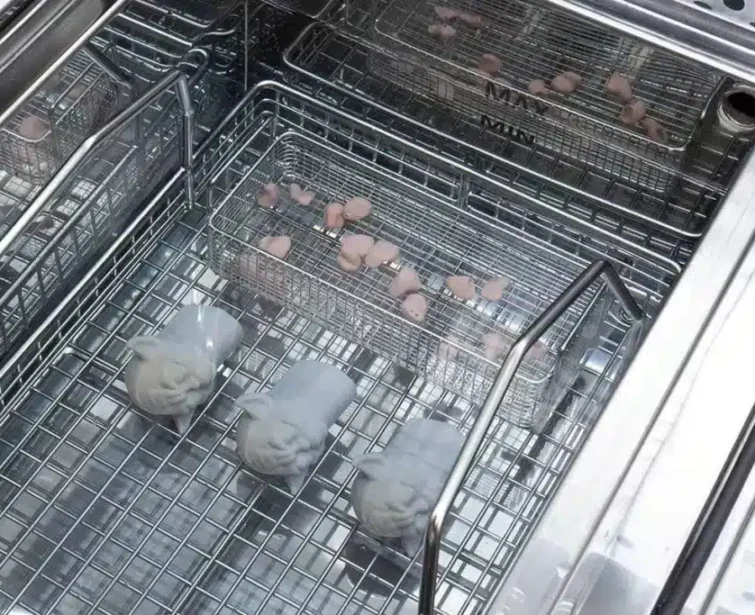
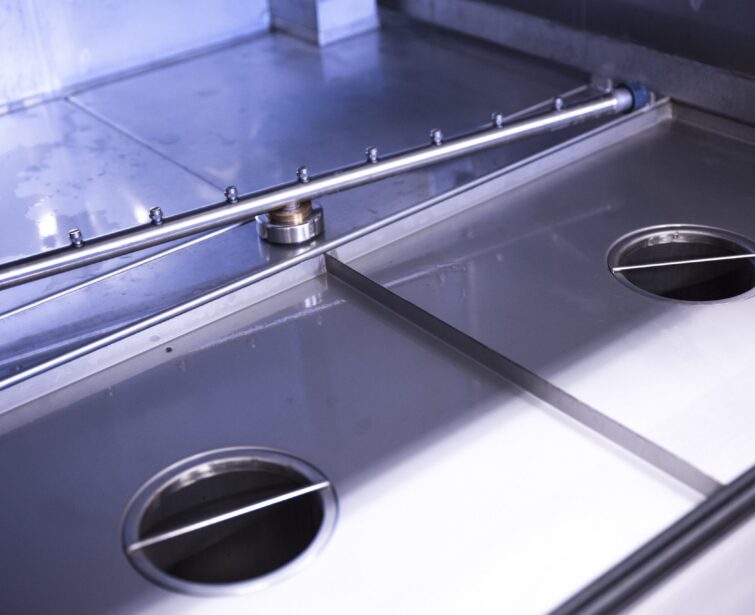
ANMASI Group offers a wide range of industrial cleaning systems, including ultrasonic cleaners, Spray washers, alcohol washers, rotary basket washers, continuous-flow washers, ATEX-certified systems, and custom-built cleaning systems.
We tailor the solution to the specific materials, cleaning requirements, and production process so that the system meets each customer’s individual needs.
Learn more about our washing systems Here.
Can a washing system be customized to meet our specific needs and production requirements?
Yes, we always tailor the washing system to your specific needs, workpieces, cleanliness requirements, and production process. When we begin a partnership, we start with your specific requirements and work together to find the solution that best suits your production.
When is ultrasonic cleaning used?
Ultralydsrensning anvendes især, når der er behov for en grundig og skånsom rengøring af komplekse, følsomme eller svært tilgængelige emner. Netop derfor anvendes ultralydsrensning ofte inden for den farmaceutiske industri, dentalbranchen og på laboratorier.
In addition, the technology is particularly effective at removing baked-on and stubborn dirt such as oil, coolants, wax, soot, dust, rust, paint, and varnish.
Ultrasonic cleaning is particularly well-suited for polished stainless steel surfaces, aluminum, metal, plastic, and synthetic materials, as well as items with small holes, recesses, or other areas that can be difficult to clean using traditional methods.
When should you use a rinse wash to clean workpieces?
Flush washing is primarily used for cleaning and degreasing larger workpieces and components to remove oil, grease, cooling lubricants, polishing paste, soot, or metal shavings. It is a versatile cleaning process used in production, machining, and maintenance, among other applications.
Spray washers are particularly well-suited for large items and are available in both Frontloader and Toploader versions. Depending on your needs, the systems can be combined with washing, rinsing, and drying to achieve the desired cleaning results.
When should you choose an alcohol-based solution?
Et alkoholbaseret vaskeanlæg anvendes typisk til små, komplekse eller svært tilgængelige emner, hvor der stilles høje krav til både renhed og tørring. Den vakuumbaserede proces gør det muligt at rengøre emner med smalle kanaler, borehuller, gevind og andre områder, som kan være vanskelige at rengøre effektivt med vandbaserede løsninger.
Vi anbefaler ofte en løsning med modificeret alkohol til emner efter bearbejdning, særligt når der er behov for effektiv fjernelse af olie og visse typer kølesmøremidler. Alkohol har meget stærke affedtningsegenskaber og er ofte den hurtigste og mest effektive metode til denne type rengøring. Det gør det muligt at opnå en høj rengøringsgrad på kort tid, også hvor vandbaserede processer kan være udfordrede.
En af de største fordele ved alkoholbaserede vaskeanlæg er den effektive tørring. Da tørringen foregår under vakuum, sikres et ensartet og grundigt resultat, også ved komplekse emner eller tætpakkede kurve med mange små komponenter.
Derudover er driftsomkostningerne ofte lavere, end mange forventer. Alkoholbaserede vaskeanlæg har typisk et lavere energiforbrug, da processen kræver mindre opvarmning end mange vandbaserede løsninger. Samtidig genanvendes vaskevæsken løbende gennem et integreret destillationssystem, som kontinuerligt fordamper og renser alkoholen under processen. Derfor skal væsken ikke udskiftes eller bortskaffes med samme hyppighed som i mange vandbaserede vaskeanlæg, hvilket både reducerer driftsomkostningerne og mængden af affald.
When should you use a Rotating basket washer to clean workpieces?
En vandbaseret roterende kurvevasker anvendes især til små og store komplekse emner, hvor der stilles høje krav til renhed. Når kurven roterer 360° under vask, sikres en effektiv rengøring af emnernes forskellige overflader og svært tilgængelige områder.
Kurvevaskere er særligt velegnede til eksempelvis hydraulikblokke og andre komplekse komponenter og kan kombineres med blandt andet spulevask, ultralydsrensning, turbulens og forskellige tørringsmetoder som varmluft og vakuumtørring.
When is it usually best to choose a Conveyor washer?
A “ Conveyor washer ” is typically best suited for continuously and automatically washing parts directly on the production line —especially for large-scale production runs of uniform parts. It can be used both between different production stages, where clean parts are necessary for further processing, and as a final wash before, for example, quality control or packaging.
Continuous-flow washers are suitable for stamped and turned parts, among other things, and can be customized with various washing, rinsing, and drying solutions. They are available as belt or drum washers, depending on the size, shape, and volume of the parts.
Dertil, har vi leveret flere specialbånd, fixtur-løsninger og kædebane systemer i denne type vaskeanlæg for at imødekomme kundernes behov. Dette kan eksempelvis være i forbindelse med automatisering af vaskeren med robot, her stilles ofte krav til placering af emnet ved load og unload, hvor vi så anvender fixturer igennem vaskeanlægget.
When is it usually best to choose a drum washer ( Frontloader)?
A chamber washer with Frontloader is typically best suited for large and heavy parts that require efficient and flexible cleaning —especially in repair shops, for molds, and after machining. The parts are placed directly into the washing chamber, and the system can handle both small and very large components, including those handled by an overhead crane.
Kammervaskeren fås i forskellige størrelser og kan tilpasses den konkrete opgave, hvilket gør den velegnet til både produktion og vedligehold.
Størstedelen af vores kunder ved denne type anlæg arbejder indenfor vedligehold, og kan være forsvarets værksteder, luftfartsindustrien, entreprenørmaskiner, lastbiler, traktorer, railway, marine- og offshore. Generelt alle virksomheder hvor de arbejder med vedligehold af emner eller værktøjer.
How do I determine how many zones my irrigation system should have?
It depends on the materials, the purity requirements, and the desired process. The number of wash zones is therefore determined as part of the needs analysis when we design the appropriate solution. At the same time, the level of investment often plays a role, since more zones typically mean a larger facility.
At ANMASI Group , we generally operate according to the following principles:
1-Stage Washing System A 1-stage system is primarily used for intermediate washing during production or for maintenance tasks. It also requires that the selected cleaning chemicals be suitable for a process without subsequent rinsing.
Multi-stage Washing System Multi-stage systems are typically recommended for newly manufactured parts that must meet documented cleanliness requirements. In such cases, one or more rinsing stages are often necessary to achieve the desired level of cleanliness.When cleaning engine parts, tools, and molds, a rinse step may also be necessary. This may be due to high cleanliness requirements or the need for subsequent rust protection.
The choice of cleaning products is also very important. Some cleaning products require rinsing to ensure optimal results and a spotless surface.
In general, we recommend a system that includes both a washing and a rinsing stage, as this ensures the highest process quality, the best cleaning results, and a more attractive final product. At the same time, the industry’s increasing cleanliness requirements are making the rinsing process increasingly important.
When should you choose vacuum drying?
Vacuum drying is typically recommended in the following situations:
1. Complex Topics
Items with many internal holes, channels, or threads can be difficult to dry completely using traditional hot air. Vacuum drying ensures effective removal of residual liquid, even in hard-to-reach areas.
2. Mass production of small parts
When small parts are washed in baskets, it can be challenging to ensure uniform drying of all the parts. In such cases, vacuum drying is often the most reliable solution.3. High demands on processing time
Vacuum drying is generally faster than hot-air drying, as the liquid evaporates at lower temperatures under vacuum. This can significantly reduce drying time, depending on the workpiece’s geometry and material.However, the choice also depends on the budget, since vacuum drying typically requires a larger investment than traditional hot-air drying.
When should you choose a water-based solution?
Generelt er vandbaserede løsninger de mest populære og alsidige, samtidig er der næsten en løsning til alle typer af opgaver med et vandbaseret eller vandblandbart produkt.
When people decide against a water-based solution, it is usually because there is a better alternative—not necessarily because the task cannot be accomplished.
Derfor anbefaler vi altid at i søger rådgivning hos os, så vi kan hjælpe jer med at tage det rigtige valg baseret på de erfaringer vi har gjort os igennem årene.
What do you usually recommend for cleaning new parts from CNC machines?
Der findes ikke ét standard svar på, hvilket vaskeanlæg der er bedst til emner fra CNC-bearbejdning. Den optimale løsning afhænger af en række faktorer, og derfor starter vi altid med en behovsanalyse sammen med kunden.
Her ser vi blandt andet på:
- Hvordan emnet er bearbejdet
- Emnets størrelse og vægt
- Antallet af emner pr. dag
- Hvilket materiale emnet er fremstillet af
- Hvordan emnerne ønskes håndteret før og efter vask
- Hvilke renhedskrav der skal opfyldes
- Krav til tørring af emnerne
- Hvilke kemikalier der må anvendes i produktionen
- Hvilke typer urenheder der skal fjernes
- Om emnerne skal passiveres efter vask
- Hvad emnerne skal bruges til efter vaskeprocessen
- Budgettet for projektet
Når vi har afdækket disse forhold, kan vi anbefale den rette kombination af vaskeanlæg, filtreringsløsning og kemi. På den måde sikrer vi, at løsningen lever op til både renhedskrav, produktionsbehov og driftsøkonomi.
What do you usually recommend for washing engine parts and tools during maintenance?
Der findes ikke ét standard svar på, hvilken løsning der er bedst til vask af motordele og værktøjer i forbindelse med vedligehold. Den optimale løsning afhænger af en række faktorer, og derfor starter vi altid med en behovsanalyse, hvor vi ser nærmere på den konkrete opgave.
Når vi taler vedligehold, anbefaler vi dog ofte vaskeanlæg af typen toplåge- eller frontlågespulevasker. Det er alsidige løsninger, som egner sig til mange forskellige opgaver og kan håndtere alt fra mindre værktøjer til større motordele.
På mange værksteder kombineres spulevaskeren med en industriel ultralydsrenser, såsom Maxi eller Maximatic. Vedligeholdsafdelinger står ofte over for meget forskellige rengøringsopgaver, hvor både emnernes geometri og typen af forurening kan variere betydeligt. Her giver kombinationen af spulevask og ultralyd en høj grad af fleksibilitet og gør det muligt at håndtere et bredt udvalg af emner og urenheder.
Derfor ser vi ofte, at større værksteder investerer i både en spulevasker og en ultralydsrenser for at kunne løse deres rengøringsopgaver effektivt. Løsningerne kombineres efterfølgende med de kemikalier, der passer bedst til opgaven. ANMASI tilbyder desuden et komplet sortiment af kemikalier til vask af motordele, værktøjer og komponenter i forbindelse med vedligehold. De fleste værksteder anvender typisk flere forskellige typer kemi, så de kan håndtere forskellige materialer, forureningstyper og rengøringsopgaver på en effektiv måde.
FAQ - Hvad kan ANMASI A/S fjerne
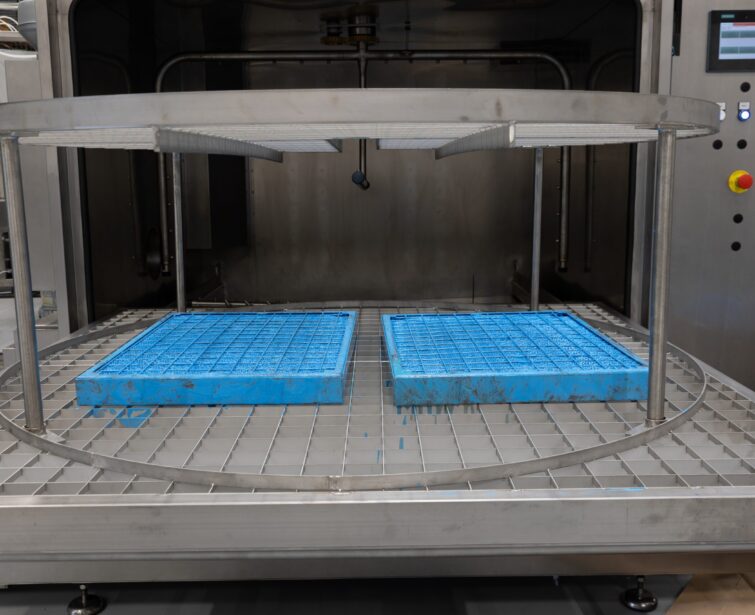
Can the ANMASI washing system be used for all metals?
Yes, our cleaning system can be used for all metals.
The key factor is usually not the washing system itself, but the choice of cleaning chemicals. Some cleaning agents can affect or damage certain materials if they are not suited to the specific application.
That is why it is important to choose the right chemical based on the type of material, the nature of the contamination, and the cleanliness requirements. At ANMASI, we are happy to help you find the optimal combination of process and chemicals so that the parts are cleaned effectively without compromising surface quality.
Can parts be painted, glued, and finished after they have gone through an ANMASI washing system?
Ja, hvis vaskeprocessen er korrekt dimensioneret, og den rette vaskekemi anvendes, kan emnerne efterfølgende både males og limes.
For at sikre optimal vedhæftning stiller leverandører af maling og lim ofte specifikke krav til overfladens renhed og kvalitet. Disse krav kan vi tage udgangspunkt i, når vi rådgiver om den rette vaskeløsning.
Hos ANMASI hjælper vi med at vælge den optimale kombination af vaskeproces og kemi, så den ønskede overfladekvalitet opnås, og emnerne er klar til den efterfølgende maling eller limning.
Can ANMASI Group remove epoxy, paint, and glue from surfaces?
Yes, ANMASI has a division that specializes in washing systems and chemicals for removing resins, including epoxy resin, polyester resin, polyurethane, and many other types. We clean both tools and workpieces and handle virtually all types of contamination in the composites industry.
In addition, we offer a complete line of cleaning systems and chemicals for stripping workpieces, hooks, and hangers from which paint, liquid paint, or powder coating needs to be removed.
The reason for our great success in this type of work is that we have developed specialized machinery solutions designed specifically for this purpose, which we combine with our neutral, mild, and water-miscible chemicals. The advantage of these solutions is that customers can often replace undesirable solvents such as acetone and MEK. This improves the work environment and makes it possible to automate the cleaning process.
Can ANMASI Group remove oil, dirt, and metal shavings from workpieces?
Ja, ANMASI startede oprindeligt med vaskeanlæg og kemikalier til metalindustrien, og vi har i dag mere end 35 års erfaring med fjernelse af olie, emulsion, fedt og metalspåner fra emner. Gennem årene har vi leveret vaskeanlæg i alle størrelser til virksomheder på tværs af metalindustrien og andre brancher, hvor metalbearbejdning indgår som en del af produktionen.
Vi tilbyder både fuldautomatiske vaskeanlæg og enkle standardløsninger, så vi kan imødekomme behovene hos både små og store virksomheder. Uanset opgaven kan vi hjælpe med at finde en løsning, der matcher kravene til renhed, kapacitet og automatisering.
Can ANMASI Group remove rust and soot from parts?
Yes, we have provided many solutions for removing both rust and soot from workpieces. This type of system is used primarily in workshops that specialize in the maintenance, repair, and refurbishment of engine parts, components, and tools.
Over the years, we have provided solutions to customers in sectors such as offshore, marine, the railway industry, defense, and construction and earthmoving equipment. Depending on the condition of the parts and the type of contamination, the washing system is combined with the chemicals and processes that deliver the best cleaning results.
Can ANMASI Group machine parts using TEM/ECM?
Ja, ANMASI har leveret flere totalløsninger, hvor kunden har valgt både vaskeanlæg og vores specialudviklede, neutrale kemi til rengøring af emner efter TEM- og ECM-processer.
Vi har leveret både små og store fuldautomatiske vaskeanlæg til effektiv fjernelse af det oxidlag, der dannes efter processen, også kendt som eksplosionsafgratning.
Vores erfaring viser, at denne type løsning især anvendes af virksomheder inden for hydraulikindustrien, hvor komponenterne ofte indgår i entreprenørmaskiner, vindmøller og forsvarsudstyr. Ved at kombinere den rette vaskeproces med specialudviklet kemi sikres en effektiv og ensartet rengøring af emnerne efter afgratningen.
Kan ANMASI Group rust beskytte emnerne når I vasker dem?
Ja, vi har leveret utallige løsninger til rustbeskyttelse og passivering af emner i forbindelse med vaskeprocessen. Afhængigt af behovet kan vi tilbyde løsninger, hvor vask og rustbeskyttelse udføres i samme proces, eller processer med flere efterfølgende trin.
I vores sortiment af passiveringsmidler findes både vandbaserede og oliebaserede produkter. Valget af rustbeskyttelse afhænger altid af den konkrete opgave og de krav, emnerne skal opfylde.
For at vælge den rette løsning ser vi blandt andet på, hvor længe emnerne skal opbevares, og under hvilke forhold de opbevares. Det er også vigtigt at vide, hvad emnerne skal bruges til efter vasken. Skal emnerne eksempelvis overfladebehandles, lakeres eller indgå direkte i produktionen, kan det have betydning for, hvilken type rustbeskyttelse der er mest velegnet.
FAQ - FILKO ApS
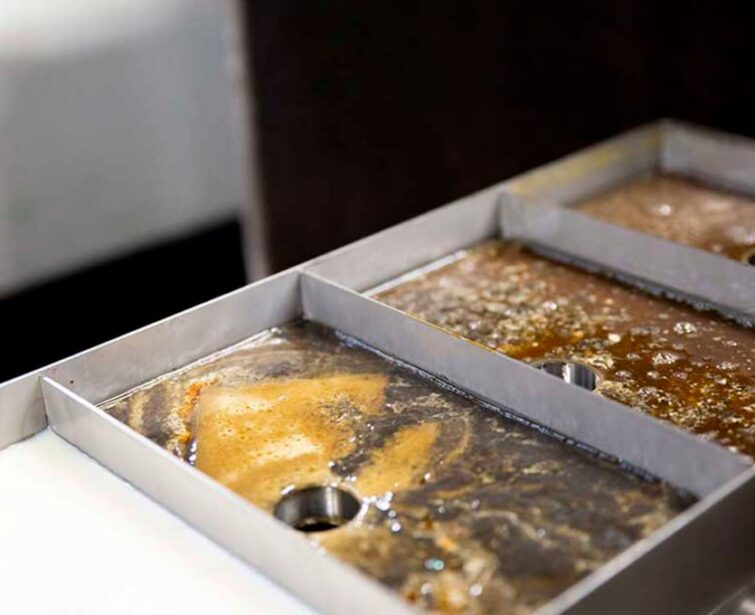
When is an oil separator used?
An oil separator is used to remove free oil and unwanted oils from process fluids. It is particularly well-suited for applications such as wash tanks, machine tools, process fluid tanks, and wastewater treatment.
The oil separator draws oil from the surface of the liquid via a self-leveling suction head. The oil is then gently separated from the process liquid through a 2- or 4-chamber labyrinth system. The gentle pumping action prevents unnecessary agitation of the liquid, ensuring effective oil separation.
An oil separator is therefore a good solution when you want to keep the process fluid free of unwanted oil, extend the fluid's service life, and ensure stable processes.
When is a magnetic separator used?
A magnetic separator is used to remove magnetic particles from various liquids, such as coolant, process fluids, oil, and wastewater. It is particularly effective at removing iron oxide, graphite, and other magnetic particles.
The magnetic separator is equipped with a powerful magnet with a large surface area, which ensures efficient collection of particles. It can also be easily integrated into existing filtration equipment, such as directly onto a Band filter.
Which industries use your filtration solutions?
FILKO’s filtration solutions are used in many different industries where there is a need to remove oil, grease, dust, hair, paint, resin, and other particles from water. Among other things, filtration can help reduce oil and grease in the water, thereby limiting bacterial growth.
Our solutions are used inindustries such asmetal, plastics, pharmaceuticals, food, defense, and aerospace, among others, but can be adapted to many other industries and production processes where the filtration of process water is relevant.
FAQ - ENVOTHERM
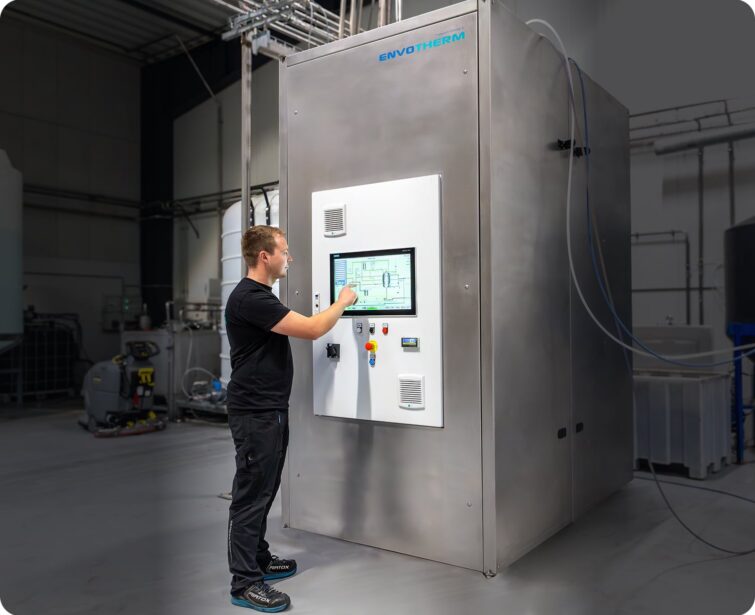
What types of wastewater can an ENVOTHERM Evaporator treat?
ENVOTHERMs anlæg er udviklet til industrielt spildevand, hvor hovedbestanddelen er vand. Anlæggene kan håndtere mange forskellige væsketyper.
This includes,amongother things, cutting fluids and oily wastewater, alkaline wash water, rinse water containing Teflon and heavy metals, as well as wastewater containing oil, soap, chemicals, and organic compounds.
How do you find the right wastewater solution for our needs?
ENVOTHERM offers testing of the customer’s wastewater, which allows us to assess how the liquid reacts to the treatment, what water quality can be achieved, and which solution is most appropriate.
The right solution depends largely on the composition of the wastewater, as well as the customer’s requirements for the purity of the treated water. A complete wastewater treatment solution may include pre-filtration, pH adjustment, evaporation, and post-treatment with activated carbon.
What models of evaporators does ENVOTHERM offer, and what are the maximum water volumes they can process?
ENVOTHERM offers 9 different models of evaporators with capacities ranging from approximately 450 m³/year to 13,500 m³/year. The models are designed to meet different needs and handle different water volumes.
The smallest model, ZLD 0.5, has a capacity of approximately 450 m³/year and an energy consumption of approximately 60–70 kWh/m³. The largest model, ZLD 10, can treat up to approximately 13,500 m³/year and has a lower energy consumption of approximately 20–30 kWh/m³.
The models vary in size and weight. The ZLD 0.5 weighs about 950 kg, while the largest model weighs about 8 metric tons. This makes it possible to choose a Evaporator that suits both the desired capacity and your specific needs.
How do you ensure the stable operation of a Wastewater treatment plant?
Reliable operation of the Wastewater treatment plant is ensured through proper pretreatment, correct sizing, ongoing monitoring, and scheduled maintenance and cleaning. This reduces the risk of scaling, downtime, and unnecessarily high energy consumption. Proper pretreatment involves effective pre-filtration and, if necessary, pH adjustment.
When might a circular solution from ANMASI Group be appropriate?
A circular solution from ANMASI Group may be relevant if you have a production facility that generates large volumes of process water, for example from internal washing processes.Bycombining filtration and evaporation, we can purify and treat the process water so that it can be recirculated and returned to the production process rather than being discharged or replaced with fresh water.
This can helpreduce your water consumption and wastewater disposal costs as well as reduce the environmental impact.
FAQ - Service
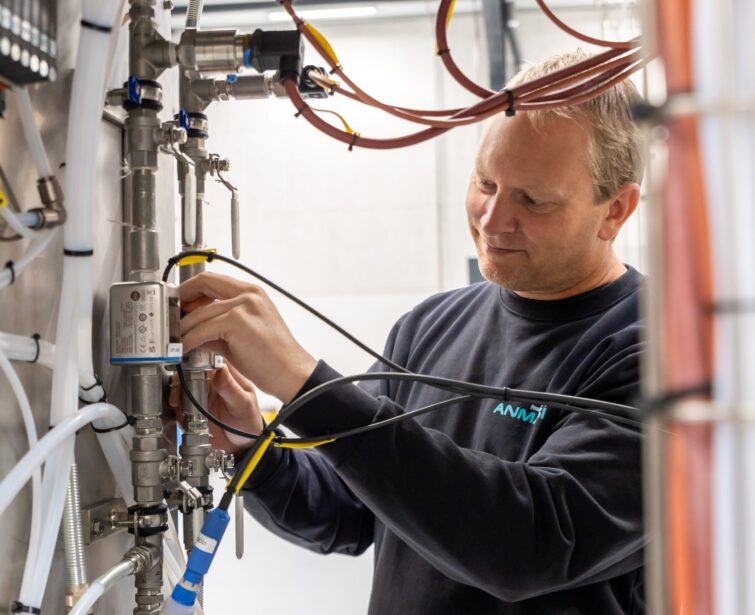
Does ANMASI Group offer service and support after delivery and commissioning?
Yes, ANMASI Group offers service and support—even after the delivery and commissioning of your system.
As a full-service provider, we offer a comprehensive service concept in which we work with you to tailor a service agreement to your needs. Among other things, we can handle the emptying, cleaning, and refilling of your washing systems, as well as the replacement of filter paper and filter bags.
If wear and tear or malfunctions occur in your washing, filtration, or evaporation systems, we can also assist with repairs and troubleshooting. Our service helps ensure high operational reliability, minimize downtime, and extend the system’s service life.
Learn more about our service concept Here.
Can you provide service and replacement parts for existing systems?
Yes, ANMASI Group is happy to assist with service and replacement parts for existing washing systems, filtration systems, and Wastewater treatment plant —even if you don’t have a service agreement with us.
We are also happy to assist with systems that were not originally supplied by ANMASI Group, if we believe we can help with the task.
Can we buy chemicals, filter bags, and filter paper at ANMASI Group?
Yes, at ANMASI Group , you can order chemicals, filter paper, and filter bags for your solutions.
We also have a Consumables warehouse in New Jersey, USA, from which we can ship chemicals, filter paper, and filter bags to our international customers.
We’d be happy to advise you on the right combination of chemicals, filter paper, and filter bags to best suit your process and needs.
How do you help customers ensure optimal operation after delivery?
We help our customers ensure optimal operations through prompt service, technical support, and ongoing guidance. ANMASI has service technicians on standby who can be at your location on short notice if you need assistance.
You can also contact us at any time at+45 76 50 02 32or [email protected] on weekdays from 7:00 a.m. to 4:00 p.m.
In addition, we offer service visits by appointment, during which we review the system’s operation and provide advice on, among other things, chemical composition, water quality, wash time, and temperaturetoensure that the system operates optimally and delivers the desired wash results.
How do foaming problems occur in a washing system?
Foam problems usually arise for the following reasons:
- The wrong chemicals are being used in the machine.
- The dosage of the chemical is too low.
- The temperature of the liquid is too low.
- The fluid in the machine has been running for too long and has become saturated with impurities, which are causing foam to form.
- The impurities that are removed tend to foam; in this situation, foaming problems don't arise until the system has been running for some time.
- The chemical solution inside is too old; with ANMASI products, this often happens if the product has been open for more than 2 years.
To ensure that you don’t run into foaming problems, it’s always a good idea to consult with us. Remember that when you purchase chemicals from ANMASI, advice and assistance regarding chemical-related challenges are always free of charge.
How important is it to have the right chemistry in the machine?
This is very important—without the right type of chemicals, we cannot complete the task. Both the washing system and the chemicals must work together and be designed to complement each other. That is why we must determine which chemicals to use as early as the initial testing and needs analysis phase.
Just as there are different types of cleaning systems, we use different chemicals depending on whether we’re using a rinse wash or ultrasonic cleaning. At the same time, we must ensure that the materials used in the cleaner are resistant to the chemicals. This could include, for example, pump seals and similar components that might otherwise be damaged.
Hvor vigtigt er det at have den rigtige type filter og olieudskiller i sit vaskeanlæg?
Choosing the right filter is crucial for a properly functioning washing system. Effective filtration and oil separation ensure a stable washing process, extend the service life of the fluid, and reduce the need for maintenance.
During the washing process, dirt, oil, and other impurities are removed from the workpieces. If these contaminants are not continuously removed from the process fluid, they will accumulate and, over time, cause problems with cleanliness, operational reliability, and operating costs.
Filtration is therefore often one of the most important— yet most overlooked—factors in a washing system. At ANMASI Group , we help you find the right solution so you can get the most out of your investment and enjoy stable operation from day one.
That is precisely why, over the years, ANMASI Group has acquired three companies specializing in filtration, oil separation, and the evaporation of process fluids. This gives us unique expertise and an understanding of just how crucial fluid treatment is to the efficiency of a washing plant.