



Machine Connection
Return stations are an important part of a Central systems, because why invest in a world-class filtration system if your machine connection isn’t capable of directing all the impurities contaminating the process fluid to the central system? It is very important to consider the type of machine connection when installing a filtration system. The right machine connection is just as important as the filtration system itself, and the installation must be performed by trained personnel to avoid efficiency issues.
Our technical specialists work with the customer to determine which solution is most suitable based on several factors, such as the degree of contamination, pump pressure, volume, and available space. We manufacture and install two types of machine connections, which are selected based on the customer’s specific application and budget.
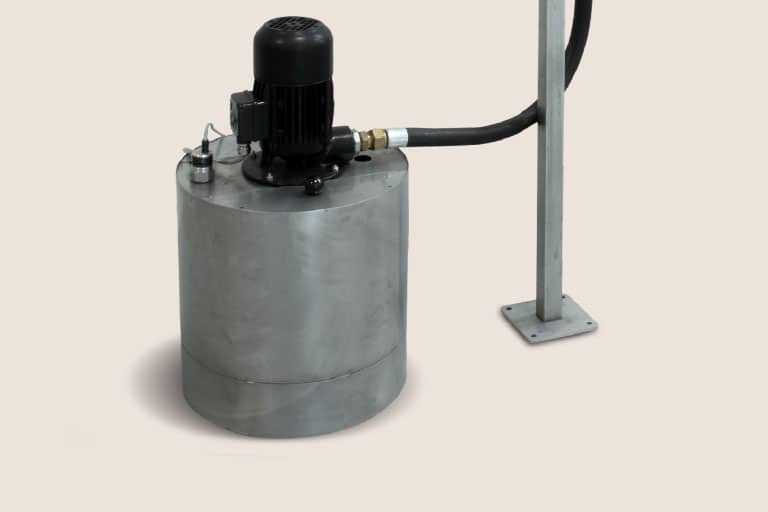
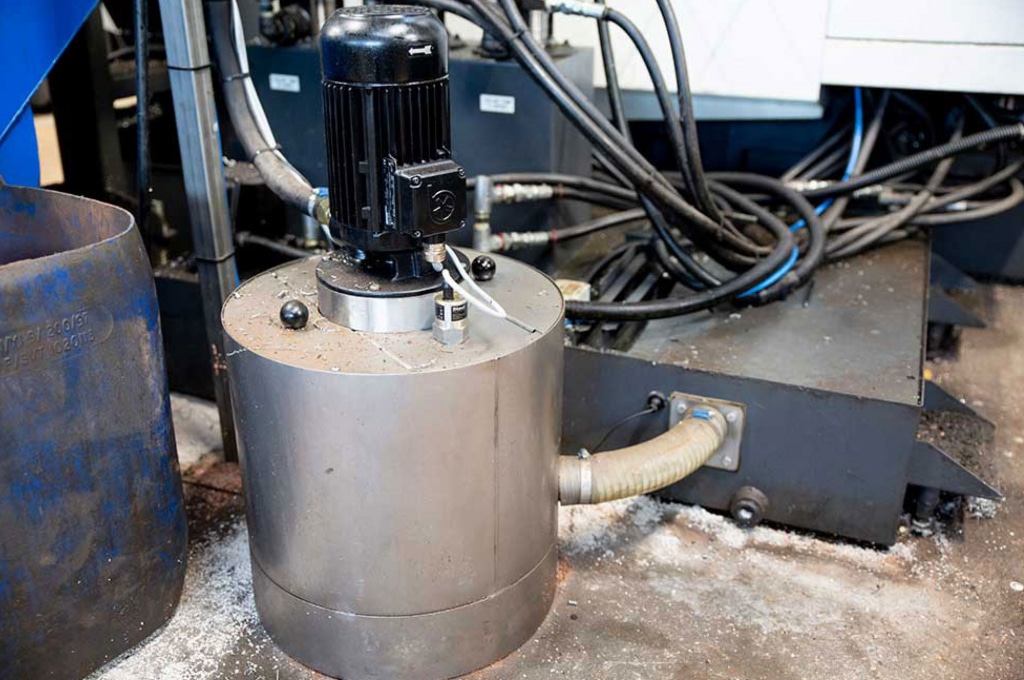
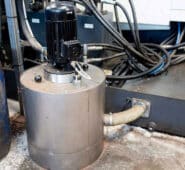
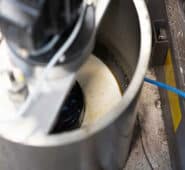
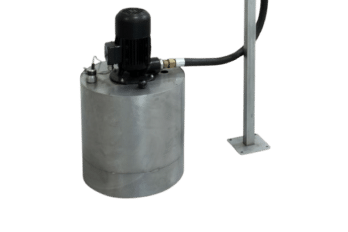
The first type is our advanced CA external connection model with a frequency-controlled pump, a self-cleaning Ø400 stainless steel return tank, and a capacitive level sensor. Our self-cleaning round CA-type pump tank with a conical bottom prevents the accumulation of particles. The pump completely empties the entire tank, eliminating the need for cleaning. The pump’s design allows larger particles to pass through, making it well-suited for machining processes.
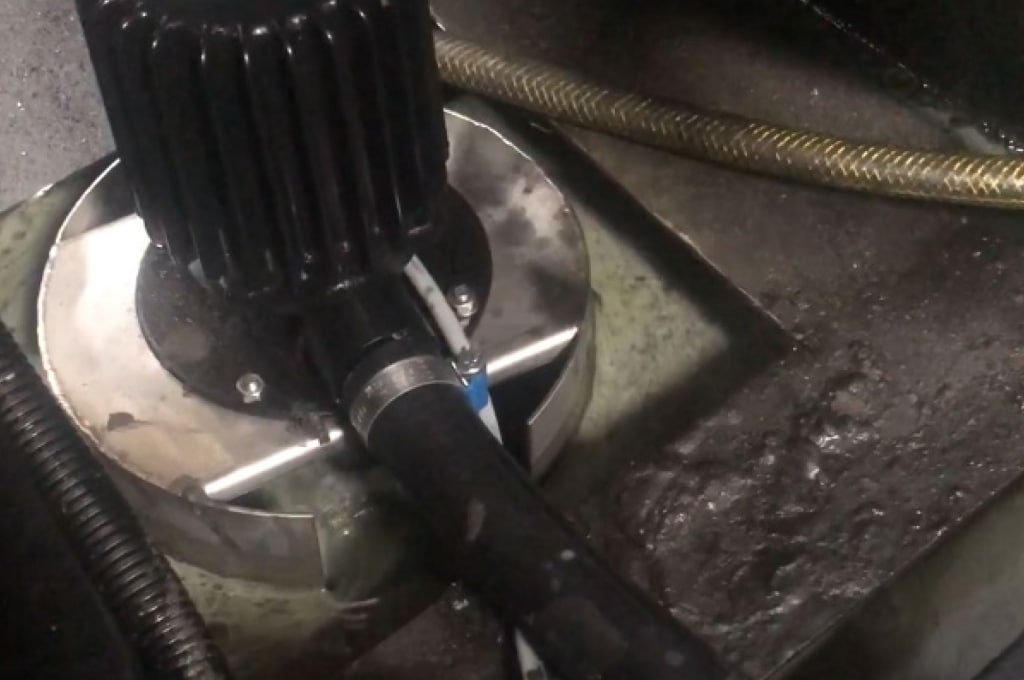
The second type is our more affordable DIR integrated connection type, in which the Ø200 pump tank is located directly inside the machine.
Table Summary: Machine Connections
| Machine Connection CA | Machine Connection DIR |
|---|---|
| Suitable for high-pressure systems | Compact and reliable solution |
| Frequency-Controlled External Pump Unit | Best for small and medium-sized machining centers |
| Electrical cabinet, including alarms | An affordable solution suitable for most applications |
| Suitable for heavily contaminated process fluids | Suitable for contaminated process fluids |
| Handles large quantities of metal shavings |
Related Products
's Frequently Asked Questions
Which filter paper should I choose?
We always recommend contacting our advisor when selecting filter paper, and when recommending a product, we always consider the following:
- Type of filter system (is it a vacuum filter where the liquid is drawn through, or is it the liquid's own weight that causes it to flow through the filter paper?)
- The process fluid (here we examine viscosity, pH, and chemical composition)
- Impurities (what do we need to filter out of the liquid, and how small are the particles we're dealing with?)
- Flow (the volume and pressure at which the fluid flows)
Once we've reviewed the information above, we can determine which type of filter paper we recommend.
How do I choose the right thickness?
The thickness of filter paper depends on the application, and it is always recommended to start by considering the size of both the small and large particles present in the liquid you need to filter. Once you have a general idea of this, you can determine which thicknesses are ideal for your application based on the micron size.
When using filter paper to build a filter cake—which forms as larger particles clump together on the filter cloth, thereby filtering smaller particles out of the liquid—you need to determine what thickness of filter paper to use to ensure this process is successful. It is also important to choose a thickness that ensures satisfactory filtration without using more filter paper than necessary.
How do I choose the right material?
The choice of filter paper depends, among other things, on the type of liquid and the strength requirements for the paper. At ANMASI Group , we offer filter paper in three materials: polyester, polypropylene, and viscose.
To ensure the best solution, we recommend that you send us a data sheet for the liquid or describe the application. That way, we can advise you on the most suitable filter paper for the job.
How well do the different types of filter paper filter?
How effectively filter paper filters depends primarily on two factors: the material’s structure and its thickness. When evaluating filtration performance, we focus in particular on the filter paper’s ability to form a dense and thick filter cake, as this is often the best indicator of how effectively particles are retained in the liquid.
At ANMASI Group , we offer four different types of filter paper, each available in several thicknesses. The different materials and surface textures provide varying filtration results, making them suitable for a variety of applications.